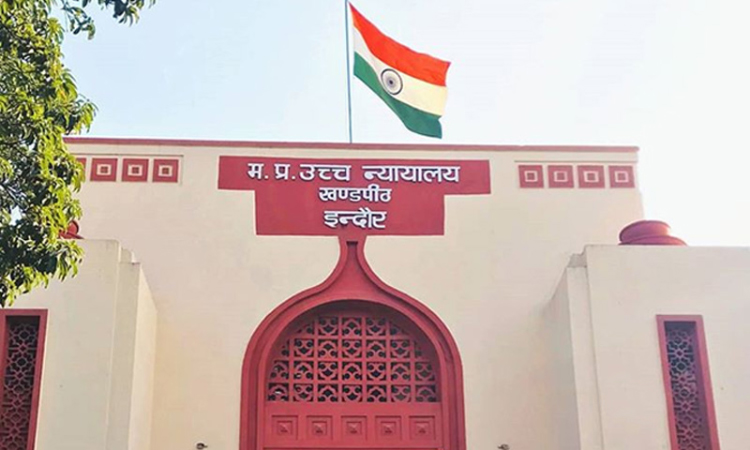
In a significant ruling, the Madhya Pradesh High Court has held that a married daughter is entitled to receive ex gratia and leave encashment if she is the sole legal heir of a deceased government employee.
The judgment reinforces the principle that marital status cannot be used as a ground to deny rightful financial benefits.
Case Background
The case involved a petition filed by Prasanna Namdev, whose father, Late Prabhat Kumar Namdev, served as a driver in the district court of Narsinghpur. He passed away in May 2025 while still in service.
Following his death, the petitioner—his only surviving legal heir—applied for various service benefits, including:
General Provident Fund (GPF)
Group insurance
Ex gratia payment
Leave encashment
While some benefits were granted, her claim for ex gratia and leave encashment was rejected solely because she was married.
High Court’s Observation
A bench comprising Justices Vivek Rusia and Pradeep Mittal ruled that:
Ex gratia and leave encashment must be paid to legal heirs without discrimination based on marital status.
The court clarified that:
A married daughter cannot be excluded if she is the only legal heir
Denial based on marital status is arbitrary and discriminatory
Such actions violate the equality principle under Article 14 of the Constitution of India
Understanding Ex Gratia Payments
Ex gratia is a voluntary payment made by an employer as a gesture of goodwill, usually to provide immediate financial relief to the family of a deceased employee.
The court emphasized that:
The purpose of ex gratia is immediate support, often for funeral and urgent expenses
It should not be denied on technical or discriminatory grounds
Even though it is not a statutory right, its intent must be respected
Leave Encashment is a Legal Right
Unlike ex gratia, leave encashment is a statutory entitlement.
The High Court highlighted that:
Leave encashment forms part of retirement benefits
It cannot be denied without due legal process
Such benefits are considered property rights under the Constitution
Nomination Strengthens Legal Claim
The court also took note that:
The deceased employee had officially nominated his daughter in service records (2016)
Earlier nominee (his wife) had passed away
The employer had already recognized her as a valid nominee by releasing GPF and insurance amounts
This recognition further strengthened her claim to all remaining benefits.
Court Rejects Employer’s Argument
The employer argued that:
Existing policies do not include married daughters for ex gratia
Nomination alone does not guarantee entitlement
However, the court dismissed this argument, stating that:
Policies cannot override constitutional rights
Excluding a married daughter with no competing heirs is unjustified
Key Takeaways from the Judgment
Married daughters are valid legal heirs
Marital status cannot be used to deny service benefits
Leave encashment is a protected legal right
Ex gratia must fulfill its purpose of immediate financial relief
Employer policies must align with constitutional principles
Why This Judgment Matters
This ruling sets an important precedent for similar cases across India, especially in matters involving:
Gender equality in inheritance and benefits
Rights of women after marriage
Fair distribution of government employee benefits
It sends a strong message that administrative rules cannot override fundamental rights.